

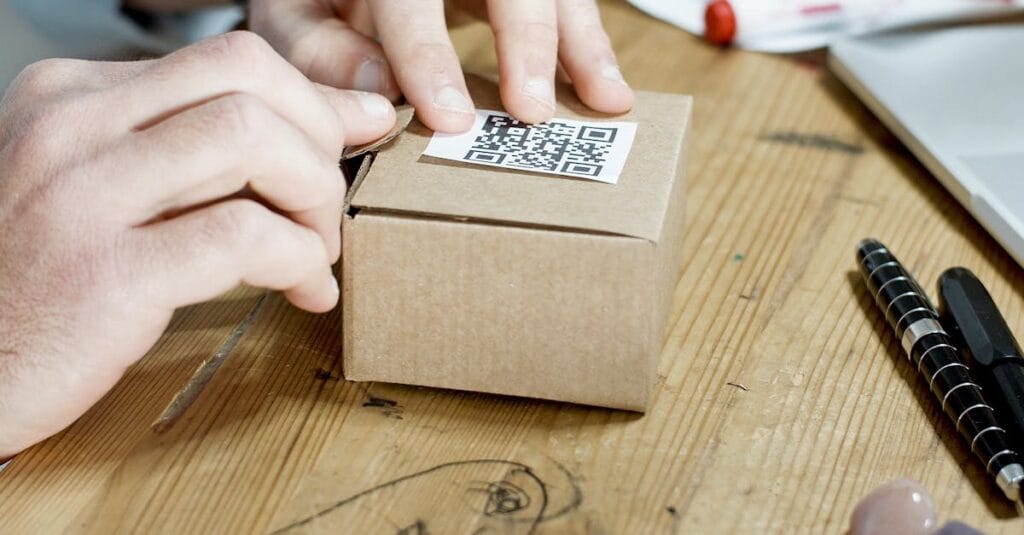
Look around. Nearly every product, package, or advertisement you see today has some sort of scannable label—either a barcode or a QR code. These small patterns of black and white lines or squares hold vast amounts of data that keep businesses running smoothly. From retail checkout lines to warehouse inventory systems and even marketing campaigns, these codes simplify operations, improve tracking, and enhance customer engagement.
But here’s the real question: Which one is better for your business—barcodes or QR codes? The answer depends on your needs, industry, and how you plan to use them.
In this article, we’ll compare barcodes and QR codes, break down their advantages and limitations, and help you decide which one makes the most sense for your operations.
What Are Barcodes?
Barcodes have been around since the 1970s, revolutionizing retail and inventory management. A barcode consists of parallel lines (1D) with varying thicknesses, representing numbers or letters that machines can read with a scanner.
How Barcodes Work:
- A scanner shines a light onto the barcode.
- The black bars absorb light while the white spaces reflect it.
- The scanner converts these patterns into a readable number or code linked to a database.
Common Types of Barcodes:
- UPC (Universal Product Code): Found on retail products worldwide.
- EAN (European Article Number): A variation of UPC, used globally.
- Code 128: Used in logistics and shipping labels.
- Code 39: Common in healthcare and automotive industries.
Pros of Barcodes:
✔️ Fast scanning speed – A simple scan retrieves product info instantly.
✔️ Universal adoption – Every store, warehouse, and distributor already supports barcode scanning.
✔️ Cost-effective – Barcodes can be printed on paper, stickers, or packaging for a few cents per label. ✔️ Works with existing systems – Most inventory and POS systems are built around barcodes.
Cons of Barcodes:
❌ Limited data storage – Barcodes store only a small set of numbers or letters.
❌ Requires a dedicated scanner – You need a barcode scanner to read them (though smartphones with apps can now scan some barcodes).
❌ Easily damaged – Scratches, smudges, or poor printing can make them unreadable.
What Are QR Codes?
QR (Quick Response) codes take barcodes to the next level. Invented in 1994 by Denso Wave, QR codes are 2D codesthat store much more data than traditional barcodes. Unlike barcodes, QR codes contain information in both horizontal and vertical directions, allowing them to hold up to 7,000 characters.
How QR Codes Work:
- A smartphone or scanner captures the QR code’s pattern.
- The software decodes the pattern into a URL, text, or other stored data.
- The device performs an instant action, such as opening a website, showing a menu, or retrieving product details.
Common Uses for QR Codes:
- Marketing & Advertising: Scanned to open websites, promotions, or videos.
- Retail & E-commerce: Used for product authentication, digital payments, or discounts.
- Inventory & Logistics: Embedded with detailed product tracking data.
- Healthcare & Restaurants: Scanned for contactless menus, prescriptions, or medical records.
Pros of QR Codes:
✔️ Stores more data – Up to 7,000 characters vs. 20-30 in barcodes. ✔️ Scannable with any smartphone – No special scanner required. ✔️ More durable – Can still be read even if partially damaged. ✔️ Can be customized – Businesses can create branded QR codes with logos and colors. ✔️ Interactive & dynamic – Can store URLs, PDFs, videos, or forms for customer engagement.
Cons of QR Codes:
❌ Requires smartphone or camera-equipped scanner – Not all businesses have QR-ready devices.
❌ Slower to scan in some cases – Barcode scanning is often quicker in fast-paced retail environments.
❌ Not universally supported in old systems – Some legacy inventory systems don’t support QR codes.
Barcode vs. QR Code: Which One Should You Use?
| Feature | Barcode | QR Code |
|---|---|---|
| Data Storage | Up to 30 characters | Up to 7,000 characters |
| Scanning Speed | Faster for POS & inventory | Slightly slower but more versatile |
| Scanner Required? | Yes (barcode scanner) | No (smartphone or camera) |
| Cost | Very low (printed on paper/stickers) | Slightly higher but still affordable |
| Durability | Easily damaged | More resilient to wear & tear |
| Use Cases | Retail, logistics, inventory | Marketing, payments, product tracking |
When to Use Barcodes vs. QR Codes
💼 Use Barcodes if:
- You need fast, reliable scanning in retail, inventory, or shipping.
- Your business relies on existing barcode-based systems.
- You want the cheapest labeling solution possible.
📲 Use QR Codes if:
- You need to store more than just numbers.
- You want customers to engage with digital content.
- Your goal is interactive marketing, payments, or tracking.
How Businesses Can Benefit from Both
Why choose one when you can use both? Many businesses integrate both barcodes and QR codes for different applications. Example:
- Retailers use barcodes for quick checkout while adding QR codes to product packaging for reviews, instructions, or promotions.
- Warehouses use barcodes for inventory tracking while implementing QR codes on pallets for detailed shipment information.
- Restaurants print QR codes on menus for digital ordering but still use barcodes for internal stock management.
Final Thoughts: Which Label System Wins?
If you’re working in a warehouse, retail store, or logistics, barcodes are still king due to their speed and universal support. But if your business needs customer interaction, marketing integration, or complex tracking, QR codes open up new possibilities that barcodes simply can’t match.
At Ayibots, we provide custom barcode and QR code labels to fit your business needs. Whether you need simple retail barcodes or high-quality QR labels, we’ve got you covered. Contact us today and upgrade your labeling system!